Help Pets Handle Vacuum Stress: Calm Training Steps
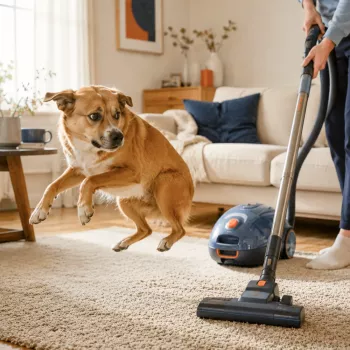
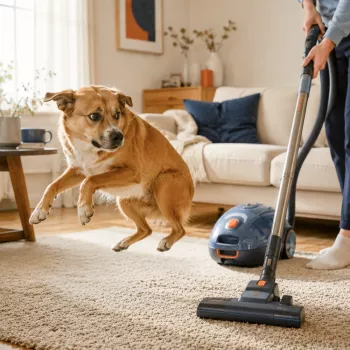
Vacuum cleaners combine loud noise, sudden movement, and unfamiliar vibrations—an intense mix for many dogs and cats. With a few adjustments to routine, targeted training, and the right calming supports, most pets can learn to tolerate (and sometimes ignore) vacuuming without panic.
Why vacuums trigger stress in dogs and cats
To a pet, a vacuum can look and sound like a fast, unpredictable “thing” invading the home. Several factors can stack together and tip a sensitive animal into stress:
- Sound intensity and frequency: Many pets hear ranges people don’t, so the motor’s pitch can feel harsher up close.
- Unpredictable movement: The start-stop pattern and approach/retreat motion may read as a threat—or, for some dogs, something to chase.
- Vibration through flooring: Even when the vacuum isn’t close, vibration can travel and amplify alarm responses.
- Negative learning: One scary moment (being cornered, chased, or startled) can create a lasting association.
- Individual sensitivity: Genetics, age, prior trauma, and limited early exposure can all increase reactivity.
Spot the difference between mild dislike and true panic
Not every pet who “doesn’t like” the vacuum needs a full training plan. The key is whether they can recover quickly and still make normal choices (like taking treats).
- Mild stress signs: ears back, lip licking, leaving the room, brief barking, watching from a distance.
- Moderate stress signs: trembling, pacing, hiding, excessive vocalizing, refusing treats, clinginess.
- Severe fear/panic signs: frantic escape attempts, destructive behavior, snapping/biting, urinating/defecating, prolonged recovery after vacuuming.
- Cat-specific early cues: crouching, tail tucked, dilated pupils, freezing, or hiding for hours afterward.
- If panic is severe or escalating, use smaller training steps and consider veterinary guidance.
Safety matters. If a dog is so frightened that they may bite when approached, follow bite-prevention best practices and avoid forcing interaction; the American Veterinary Medical Association (AVMA) outlines practical precautions for stressful situations.
Set up a low-stress vacuum routine before training
Before you train, make everyday cleaning less overwhelming. These small changes reduce the “big scary event” feeling and prevent rehearsing panic behaviors.
- Create a predictable safe zone: a closed room, a covered crate (if crate-trained), or a quiet corner with bedding and water.
- Add sound buffering: close doors, block the door gap with a towel, and start vacuuming farther away.
- Time it right: avoid vacuuming during meals, arrivals, or other high-arousal moments.
- Meet needs first: a dog who has had a walk or sniff time is usually more able to settle.
- Prevent chasing: use baby gates or a leash if the pet tends to lunge or herd the vacuum.
Desensitization and counterconditioning plan (step-by-step)
The goal is controlled, gradual exposure paired with good things (treats, licking, chewing). Progress only when your pet stays relaxed at the current step.
Step 1 — Vacuum off, far away
Place the vacuum in view without turning it on. Feed high-value treats for calm behavior, then end the session before your pet looks worried.
Step 2 — Movement without sound
Roll the vacuum a few inches, treat, and stop. Over multiple sessions, increase movement distance and duration while keeping your pet comfortable.
Step 3 — Add sound at a distance
Step 4 — Bring it closer slowly
Step 5 — Real-life practice
Training rules: keep sessions short (1–3 minutes), prioritize calm over “toughing it out,” and never punish fear (yelling or forced proximity can increase fear and raise bite/scratch risk). For additional background on behavior patterns—especially in cats—see the ASPCA’s overview of common cat behavior issues.
| Stage | What the pet sees/hears | Goal behavior | If stress appears |
|---|---|---|---|
| 1 | Vacuum present, turned off | Sniffing, loose body, taking treats | Increase distance; shorten session |
| 2 | Vacuum rolls quietly | Stays in place or disengages calmly | Reduce movement; add more rewards |
| 3 | Vacuum sound from another room | Eats treats; no trembling/hiding | Move sound farther away; lower duration |
| 4 | Vacuum on in same room (far corner) | Relaxed posture; chooses safe zone | Go back to Step 3 for several sessions |
| 5 | Normal vacuuming routine | Settles with chew/lick mat; recovers quickly | Return to shorter, smaller-area practice |
Calming supports that can help during practice
For noise management, a small speaker can help mask sudden spikes and make the soundscape more consistent; the 20W Portable Bluetooth Speaker is a simple option for playing steady white noise or calming playlists. For additional guidance on noise-related stress, the RSPCA’s tips on keeping dogs calm around noises can be a helpful reference point.
Using “Helping Pets Handle Vacuum Stress” as part of the routine
Consistency is what turns practice into progress. Helping Pets Handle Vacuum Stress can be used as a structured support step alongside your training plan, especially if you want a repeatable routine from session to session.
Common mistakes that slow progress
When to talk to a veterinarian or behavior professional
FAQ
How long does it take for a pet to get used to the vacuum?
Many pets improve within a few days to a few weeks with short, consistent sessions and gradual distance changes. Severe fear can take longer, and progress is often best measured by faster recovery and better ability to eat treats during exposure.
Should the vacuum be kept away completely, or can exposure help?
Controlled exposure helps when it’s gradual and paired with rewards (desensitization and counterconditioning). Forced exposure or “just letting them deal with it” can worsen fear, so manage cleaning with a safe zone while training happens in short, planned steps.
What if my dog tries to attack or herd the vacuum?
Start with safety: use gates or a leash to prevent rehearsing chasing or biting, and redirect to a stationary “job” like settling on a mat with a lick treat. If the behavior escalates or your dog can’t disengage, a trainer can help you build calm, distance-based control.





Leave a comment