120W 50,000mAh Power Bank for Samsung: Real Speed Guide
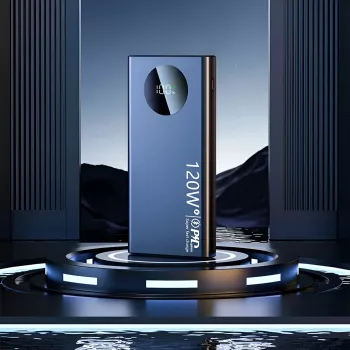
120W Fast-Charging Power Bank (50,000mAh) for Samsung: What It Means in Real Use
A high-wattage, high-capacity power bank can keep Samsung phones and tablets running through long commutes, travel days, and multi-device workloads. The key is matching charging standards, cable capability, and realistic capacity expectations so charging is fast, stable, and safe.
Why wattage and capacity both matter for Samsung devices
When shopping for a power bank for a Samsung phone or tablet, two specs do very different jobs: wattage (how fast power can be delivered) and capacity (how much total energy is stored).
- Wattage (W) influences how quickly power can be delivered when the phone and charger agree on a fast-charging profile.
- Capacity (mAh/Wh) influences how many total recharges are possible before the power bank itself needs a refill.
- A 50,000mAh-class power bank is built for multi-day use and multiple devices, not just one emergency top-up.
- Actual usable capacity is always lower than the printed number due to voltage conversion and efficiency losses.
| Spec on the box | What it affects | What to check for Samsung |
|---|---|---|
| 50,000mAh | Total stored energy (approximate) | Convert to Wh when possible; expect some efficiency loss |
| 120W (max) | Peak output capability | Phone may draw less; ensure PD/PPS compatibility for best results |
| USB-C output | Fast-charging port type | Use a USB-C to USB-C cable rated for the needed wattage |
| Multiple ports | Charging several devices | Total shared output may be lower when charging more than one device |
Fast charging on Samsung: what determines the speed
A “120W power bank” doesn’t automatically mean “120W charging” on a Samsung phone. Real speed is determined by the charging standard your device supports and what the power bank can negotiate.
- Samsung fast charging typically relies on USB Power Delivery (USB PD) and, on many models, PPS (Programmable Power Supply) for the highest supported rates. A clear overview of PD is available from the USB-IF at usb.org.
- The phone negotiates power with the power bank; if PPS isn’t available, charging can fall back to a slower PD profile.
- Cable quality matters: higher wattage requires an e-marked USB-C cable designed to safely handle higher current without excess heat or voltage drop.
- Heat management matters: charging can slow down if the phone or power bank warms up (common in pockets, cars, or direct sun).
- Background usage matters: navigation, hotspot, gaming, streaming, and camera use reduce net charging speed because the phone is spending power while it charges.
For device-specific charging care and battery health guidance, Samsung’s support resources can help: Samsung Support.
How many charges can a 50,000mAh power bank provide?
Capacity can be confusing because power banks are usually rated at their internal battery voltage (commonly around 3.7V), while your phone charges at 5V, 9V, or other levels depending on the fast-charging mode. That voltage conversion costs energy.
- A practical rule is to assume 60% to 75% usable energy after conversion losses and heat.
- For a quick estimate: convert the power bank to watt-hours (Wh) if listed, then divide by your phone’s battery Wh and apply an efficiency factor.
- Bigger devices (tablets) and multi-device days (phone plus earbuds plus a second phone) are absolutely doable, but full recharges vary with device size and how actively the devices are used during charging.
| Device type | Typical battery size | Likely full recharges from 50,000mAh class (range) |
|---|---|---|
| Samsung flagship phone | 4,500–5,500mAh | 4–7 |
| Samsung midrange phone | 4,000–5,000mAh | 5–8 |
| Small tablet | 7,000–8,500mAh | 2–4 |
| Earbuds case | 400–800mAh | 20–60 (depending on losses and port use) |
Daily use scenarios: when a 120W power bank is especially helpful
Higher output and higher capacity shine in real-life situations where short charging windows and multiple devices collide.
- Travel days: fast top-ups between connections, rideshares, and gate changes, without hunting for outlets.
- Long commutes: quick boosts before arriving, plus enough reserve for the return trip and unexpected delays.
- Work-from-anywhere: a phone + tablet + headphones day on one battery pack, especially when you’re moving between meetings or coworking spaces.
- Family or group charging: multiple devices from one hub (just remember that total output may be shared across ports).
- Backup power: enough reserve for calls, maps, 2FA/authenticator apps, and emergency communication when power is out.
Safety and longevity: charging without stressing the battery
Fast charging is designed to be safe, but habits and environment still matter. Lower heat generally equals better long-term battery health for both your phone and the power bank.
If you fly often, review airline guidance on lithium battery limits and carry-on rules. The FAA summary is a helpful reference: FAA Pack Safe.
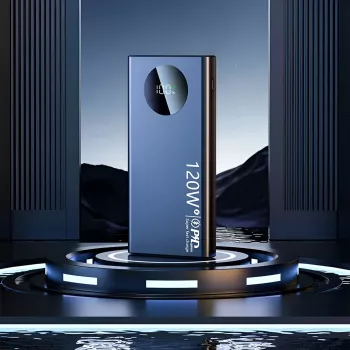
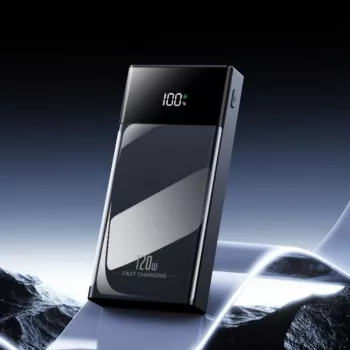
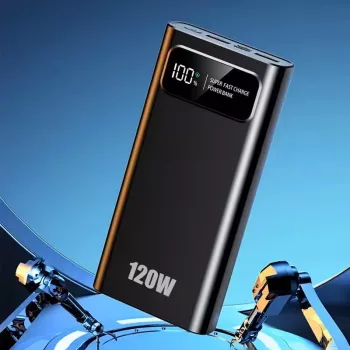
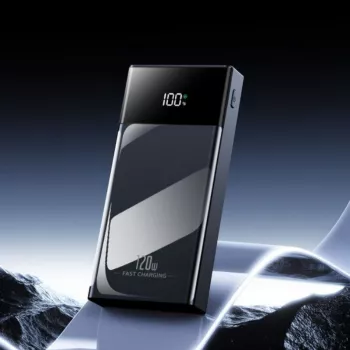
Product spotlight: 120W Fast Charging Power Bank 50,000mAh for Samsung
Featured item: 120W Fast Charging Power Bank 50000mAh for Samsung (In stock, $15.51).
Practical checklist before checkout
FAQ
Will a 120W power bank charge a Samsung phone at 120W?
No. A phone only draws the maximum wattage it supports, and the final charging speed depends on USB PD/PPS compatibility, the cable’s rating, and temperature-based throttling.
How many times can a 50,000mAh power bank recharge a Samsung phone?
Typically about 4–8 full recharges depending on your phone’s battery size and real-world efficiency losses. A practical estimate assumes 60–75% usable capacity after conversion and heat.
Why does fast charging sometimes slow down halfway through?
Charging speed naturally tapers as the battery fills to protect battery health, and it can slow further if the phone warms up or is being used heavily while charging.



Leave a comment