Learn AI Skills Fast: A 2-Week Sprint Framework
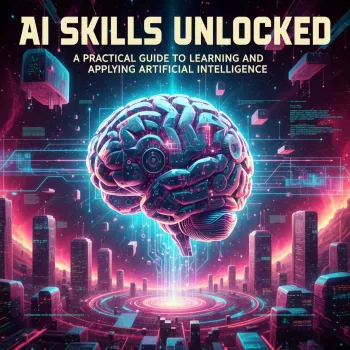
AI Skills Unlocked: A Practical Guide to Learning and Applying Artificial Intelligence
Building AI capability is less about memorizing tools and more about learning a repeatable process: understand core concepts, practice with real tasks, and apply feedback quickly. The fastest progress comes from shipping small, testable solutions, measuring what happened, and tightening the loop. Below is a practical path for beginners and working professionals to develop AI skills faster—without getting lost in hype, math overload, or endless tutorials.
What “AI skills” actually include
“AI skills” are a mix of technical fundamentals, workflow habits, and decision-making judgment. When people get stuck, it’s usually because one of these pieces is missing.
- Concepts: data, models, training vs. inference, evaluation, and limitations (what a system can’t reliably do).
- Practical workflows: problem framing, data handling, experimentation, iteration, and deployment basics.
- Tool fluency: notebooks, APIs, basic Python, and common libraries (only when needed).
- Human skills: critical thinking, communication, and ethical judgment around automated decisions.
- Career context: matching AI methods to business goals, constraints, and stakeholders.
If you want a clear reference for terms that show up constantly in projects and documentation, the Google Machine Learning Glossary is a reliable, plain-language resource.
A fast learning loop for AI: learn → build → reflect
Progress accelerates when learning is tied to outcomes and feedback. Instead of starting with a tool, start with a measurable result and build the smallest version that proves the end-to-end flow works.
- Start with a concrete outcome (reduce support tickets, classify documents, forecast demand) instead of a tool.
- Learn only the minimum theory required to make the next build decision.
- Build a tiny prototype quickly; prioritize an end-to-end pipeline even if accuracy is low.
- Measure results with simple metrics (accuracy, precision/recall, cost, latency) and qualitative checks.
- Reflect: write a short post-mortem—what assumptions were wrong, what data was missing, what improved performance.
Two-week skill sprint plan (repeatable)
| Days | Focus | Deliverable |
|---|---|---|
| 1–2 | Problem framing + baseline | One-page problem statement and a simple baseline approach |
| 3–5 | Data understanding | Dataset notes: sources, schema, missing values, labeling plan |
| 6–8 | First model / solution | Working prototype with a clear evaluation script |
| 9–11 | Improve + test | Two improvements tested (features, strategy, model choice) with results logged |
| 12–14 | Apply + communicate | Short demo + a brief report: tradeoffs, risks, next steps |
Core foundations that pay off in every AI project
Strong foundations reduce rework and make your results easier to trust. These areas consistently produce better decisions than chasing the newest model release.
- Data literacy: types of data, leakage, bias, label quality, and train/test splits that reflect reality.
- Probability intuition: uncertainty, false positives/negatives, and basic calibration (when a “90% confident” score isn’t truly 90%).
- Evaluation habits: compare to baselines, avoid overfitting, and verify performance on realistic samples.
- System thinking: how AI fits into a workflow (inputs, outputs, fallbacks, monitoring, and human handoffs).
- Responsible use: privacy, security, transparency, and appropriate human oversight.
For practical guidance on risk and governance, the NIST AI Risk Management Framework is a strong standard. For high-level principles used across industries and governments, see the OECD Principles on Artificial Intelligence.
Practice paths for different roles
AI learning sticks when it matches your day-to-day responsibilities. Pick a practice track that mirrors the decisions you’ll actually make.
Beginners
Start with spreadsheet-friendly datasets and a single clear metric. Build a simple classifier or predictor, then practice explaining what the model is doing and where it fails.
Analysts
Focus on forecasting, anomaly detection, clustering, and using AI to accelerate reporting workflows. The win is often time saved and fewer manual errors—not perfect predictions.
Managers
Learn to scope AI projects, assess ROI, and set guardrails for risk and compliance. A manager’s superpower is preventing “cool demo” work from becoming unmaintainable production debt.
Engineers
Practice integrating models via APIs, building pipelines, adding monitoring, and managing cost/latency. Treat evaluation and observability as first-class features.
Creators/marketers
Experiment with AI-assisted research, drafting, and content QA while maintaining brand standards. The key skill is building a repeatable review process that catches factual drift and tone issues.
Common pitfalls that slow learning (and how to avoid them)
Turning learning into real-world outcomes
Digital eBook overview: AI Skills Unlocked
If a structured plan would help you move faster, AI Skills Unlocked: Digital eBook is designed for beginners and professionals who want a practical learning path with repeatable frameworks and applied exercises. It’s built for quick reference during sprints, study sessions, and project planning.
To support the career side—portfolio positioning, job search planning, and professional growth—pair it with the Step-by-Step Career Development Guide eBook. And if you’re building on the go (work sessions, travel, or coworking), the 120W Fast Charging Power Bank 50000mAh for Samsung helps keep your devices ready for longer learning sprints.
FAQ
How long does it take to learn practical AI skills?
With 5–10 hours per week, many people reach “useful and project-capable” in 6–12 weeks by completing a few small sprints. Faster progress comes from repeating the learn → build → reflect cycle rather than waiting to feel fully ready.
Do AI beginners need advanced math to start?
No—basic algebra and statistics intuition is enough for many practical applications. Learn math on-demand when a project requires it, and prioritize data quality and evaluation habits early.
What’s the best first AI project for a portfolio?
Pick a tightly-scoped project with clear metrics, like classifying incoming requests, building a simple forecasting model, or creating a summarization-and-QA workflow with human review. Include a baseline comparison, document limitations and edge cases, and note any ethical or privacy considerations.




Leave a comment