100000mAh 120W Power Bank for Samsung: Fast, Multi-Port
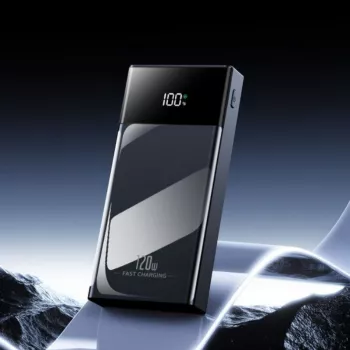
Power that keeps up: 100000mAh and 120W fast charge for Samsung
A high-capacity, high-wattage power bank can keep a Samsung phone and several accessories running through travel days, long shifts, and unexpected outages. The key is understanding what “100000mAh” and “120W” mean in real use, how multiple USB ports share output, and what to check so charging stays fast, safe, and predictable.
What 100000mAh capacity means day to day
mAh is a capacity rating tied to the battery cells inside the power bank, but the usable energy you get out is typically lower after voltage conversion (the bank’s internal battery voltage must be boosted to 5V/9V/12V and beyond) and normal heat losses. That’s why “100000mAh” doesn’t translate into a simple, perfect number of phone recharges.
A bank this large shines when you need repeated charging for multiple devices: multi-day travel, camping, emergency kits, field work, or powering a family’s phones and accessories from one shared battery. The tradeoff is portability—very high capacity usually means more size and weight, and airline rules can limit which high-capacity lithium power banks are allowed in carry-on. Before flying, review the latest guidance from the TSA on portable chargers and lithium batteries.
| Scenario | What affects results | What to expect |
|---|---|---|
| Charging a Samsung phone from low to full | Phone battery size, conversion losses, fast-charge heat management | Multiple full recharges over time; fewer than the raw 100000mAh number implies |
| Charging several devices in a bag (phone + earbuds + watch) | Total combined draw, idle drain, cable quality | Many top-ups and partial charges across days |
| Using high-power ports for tablets/laptops | Power profile negotiation (USB-C PD), device limits, cable wattage rating | Faster charging than low-watt banks when supported; still limited by the device |
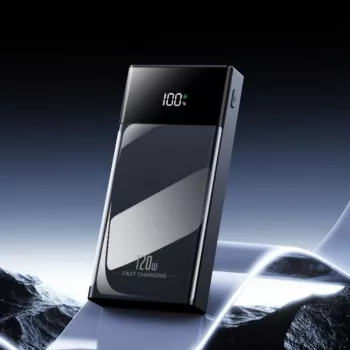
If the goal is maximum runtime with fewer “bank recharges,” a very high-capacity option like the 100000mAh 120W Fast Charge Power Bank for Samsung with Multiple USB Ports is built for long stretches away from an outlet.
Understanding 120W fast charging for Samsung devices
“120W” is the power bank’s maximum output capability—not a guaranteed charging speed for every device you plug in. Charging power is negotiated between the power bank and the connected device, and the device will draw only what it supports. Many Samsung phones use USB-C Power Delivery (PD) and specific fast-charge profiles; the phone may cap well below 120W even if the bank can provide more.
That extra wattage headroom is still valuable. It helps when you’re charging multiple devices at once (so one device doesn’t starve another) and when you connect larger devices that can negotiate higher PD levels. For best results, use a USB-C PD-capable cable rated for the wattage you’re trying to deliver; a low-quality or under-rated cable can force slower charging or create extra heat.
If you want a quick reference for how modern fast charging negotiates power, the USB-IF overview of USB Power Delivery (USB PD) is a helpful baseline. For device-specific charging behavior and settings, Samsung’s official support resources on fast charging are also a practical check.
Multiple USB ports: how shared power works
Multiple ports are a major convenience: you can top up a Samsung phone while also charging earbuds, a watch, a tablet, or a second phone. The important detail is that many multi-port power banks share a total output budget across ports. When only one device is connected, it may receive near-maximum speed; with three or four devices connected, charging speed can drop per device to keep total output within limits.
In most setups, USB-C ports are the best choice for fast charging because they typically support USB-C PD. USB-A ports are great for legacy cables, small accessories, and low-draw items, but they often top out at lower wattage and may use different fast-charge standards.
Charging speed tips that make a noticeable difference
Use the right cable (and replace worn ones)
Keep devices cool to avoid throttling
Connect the most important device first
Reduce active drain while charging
Use pass-through only when it’s explicitly supported
Safety and longevity checks for high-capacity power banks
Product pick: 100000mAh 120W fast charge model with multiple USB ports
If the priority is long runtime plus the flexibility to charge several devices at once, the 100000mAh 120W Fast Charge Power Bank for Samsung with Multiple USB Ports is a strong fit for travel groups, field work, events, emergency preparedness, and shared charging. For everyday carry where weight matters more than maximum runtime, a smaller high-watt option can feel much easier to live with.
| Option | Capacity class | Best for |
|---|---|---|
| 100000mAh 120W Fast Charge Power Bank for Samsung with Multiple USB Ports | Very high | Multi-day power and charging several devices |
| 120W Fast Charging Power Bank 50000mAh for Samsung | High | Faster everyday carry with fewer recharges |
FAQ
Will a 120W power bank charge a Samsung phone at 120W?
Not necessarily. The phone and power bank negotiate charging power using USB-C PD and supported fast-charge profiles, and many Samsung phones cap below 120W even if the bank can output that maximum.
Does charging multiple devices at once make charging slower?
It can. On many multi-port banks, total output is shared across ports, so each device may receive less power when several are connected; put the main device on the fastest USB-C port for best results.
How long does a 100000mAh power bank take to recharge?
Recharge time depends on the bank’s input wattage and real-world efficiency. A high-watt USB-C input can cut hours off the refill time, while a low-watt charger may take much longer and generate more heat over an extended session.




Leave a comment